



The most revolutionary artistic period of the XIX century is the Impressionism, which resonates a lot with my personal perception of the essence of visual art, along with the representation of colour and light in painting. With his provocative painting, Impression, Sunrise, first exhibited in Paris in April 1874, Claude Monet gave, unintentionally, the name to the incipient impressionist movement that, at that time, also included other contemporary artists such as Pisarro, Manet, Renoir and Sisley. The term was used in a derociative sense by art critic Louis Leroy in his critique of the collective exhibition that the painters had organised in opposition to the academic school, but it was adopted by the movement as a way of describing their approach to painting. Impressionism was a term used before this painting was exhibited in 1874 to describe the effect of a natural scene on the painter or the effect of a painting on the viewer.
Impressionism in Spain: Sorolla, Regoyos and Beruete
Impressionism is, without a doubt, one of the most influential artistic movements in the history of art. Although its origin is located in France with figures such as Monet, Renoir and Degas, its impact spread throughout Europe, reaching Spain and finding its own voice in artists such as Joaquín Sorolla, Darío de Regoyos, Ramon Casas and Aureliano de Beruete.
Joaquín Sorolla: The Master of Light
Joaquín Sorolla (1863–1923) is the most famous Spanish Impressionist painter, celebrated for his extraordinary capture of Mediterranean light in works like Seaside Walk (1909) and The Horse’s Bath (1909). Unlike the French Impressionists, he never abandoned black in his palette, using it to sharpen contrast and depth — a signature of the Valencian luminism he helped found. Read the full profile on Sorolla and Spanish Impressionism for more on his featured works and connection to French Impressionism.
Connection with French Impressionism
Sorolla was in contact with Impressionism during his trips to Paris, where he could see the works of Monet and Renoir up close. However, his painting was not a simple imitation of the French, but incorporated elements of the Spanish tradition, especially the influence of Velázquez and Goya.
Unlike the French impressionists, who used to avoid black in their paintings, Sorolla did not hesitate to use it when necessary, which allowed him to create more marked contrasts and give depth to his compositions.
His impact on Spanish painting was enormous, and his style influenced later generations, especially the current of Valencian luminism.
Darío de Regoyos: Symbolic Impressionism
Darío de Regoyos (1857–1913) took a darker, more melancholic path than Sorolla, shaped by his years in Belgium alongside the Groupe des XX and neo-Impressionists like Seurat. His series La España Negra (1899) traded Impressionist luminosity for a symbolist, shadowed vision of rural Spain. Read the full profile on Darío de Regoyos for his featured works and Belgian influences.
Although he never reached Sorolla’s popularity, his work was key to the introduction of Impressionism and Symbolism in Spain.
Aureliano de Beruete: Impressionism and Spanish Landscape
Aureliano de Beruete (1845–1912), painter and art critic, modernized Spanish landscape painting while remaining anchored in the tradition of Velázquez. Works like La Sierra de Guadarrama (1906) show loose, atmospheric brushwork applied to distinctly Castilian subjects. Read the full profile on Aureliano de Beruete for more on his featured works and role as a critic.
Featured Works
La Sierra de Guadarrama (1906): a majestic landscape that shows its ability to capture the atmosphere and light with loose brushstrokes. Vista del Manzanares (1900): In this work, Beruete combines impressionist influence with a realistic approach, achieving a vivid representation of Madrid’s nature. Landscape of Toledo (1910): A tribute to the city of El Greco, where the colour and texture evoke the spirituality of the landscape.
Connection with French Impressionism
Although Beruete admired Impressionism, his painting never completely abandoned the precise structure and drawing. His great reference was Velázquez, whose use of air and atmosphere influenced his way of representing landscapes.
In addition, his role as an art critic and defender of modern painting helped introduce Impressionism in Spain and prepare the ground for the avant-gardes of the twentieth century.
Influence of Impressionism on Spanish Music and Literature
Impressionism not only transformed painting, but also had an impact on other arts, such as music and literature.
In music, composers such as Manuel de Falla were influenced by French Impressionism, especially by Debussy and Ravel. Works such as Nights in the Gardens of Spain (1915) reflect this influence through their use of instrumental colour and the evocative atmosphere.
In literature, writers such as Juan Ramón Jiménez incorporated impressionist elements into their poetry, seeking to capture sensations and moods through language. His work Platero and I (1914) is a clear example of this sensitivity.
The Legacy of Impressionism in Spain
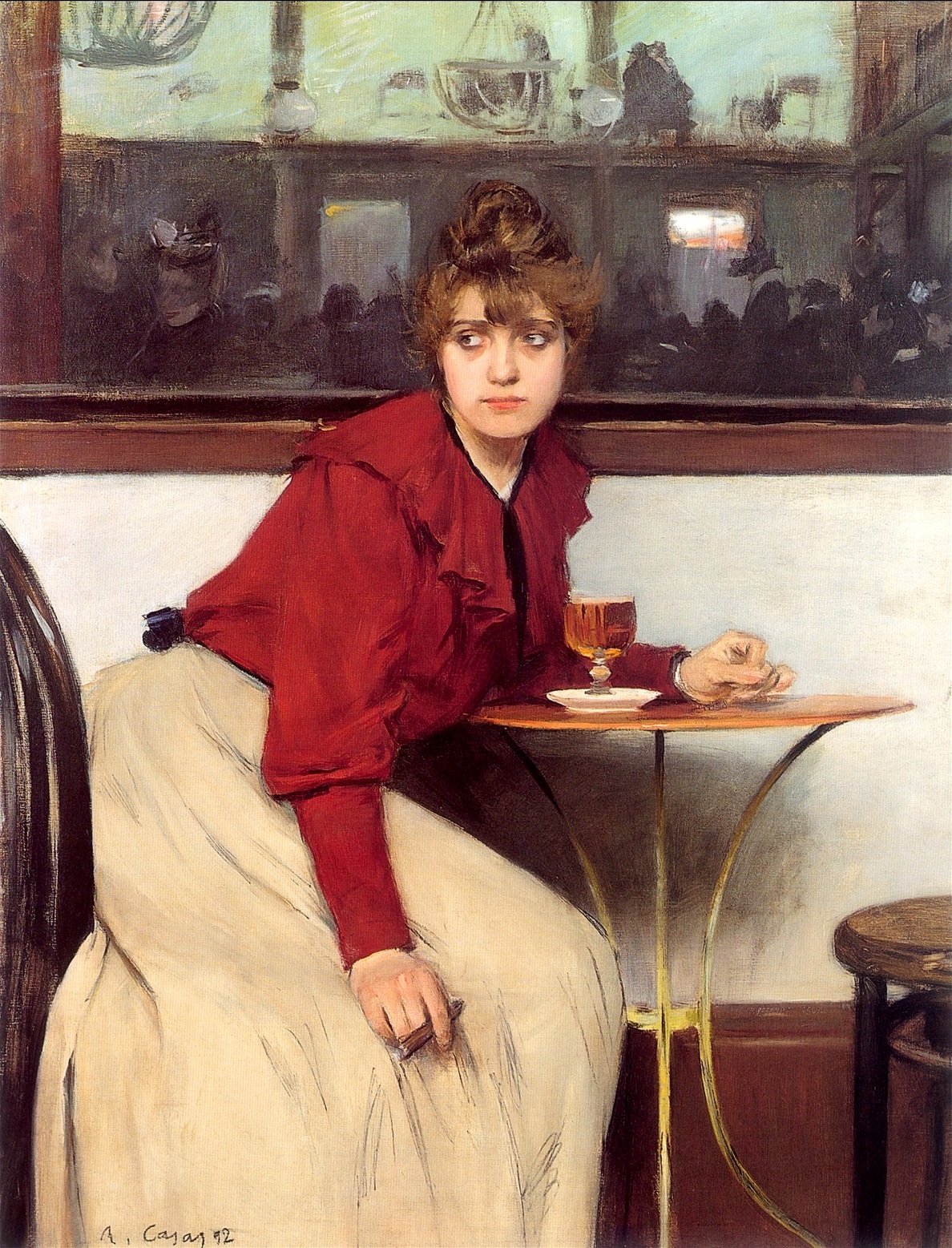
Although Impressionism was never a dominant movement in Spain, its influence was felt in several generations of artists. Painters such as Hermenegildo Anglada Camarasa and Eliseu Meifrèn continued to explore his techniques, while his impact became evident in the development of Spanish luminism and post-impressionism.
In addition, the work of Sorolla, Regoyos and Beruete helped redefine the way in which landscape and light were represented in Spanish painting, laying the foundations for later movements such as the School of Madrid in the 20th century.
Today, his legacy is still alive, and his works continue to be studied and admired as examples of a Spain that knew how to absorb the spirit of Impressionism without losing its own identity.

Although Impressionism is often identified with a specific circle of French painters working in Paris in the 1870s and 80s, its influence extended far beyond them in two distinct ways.
First, painters of other nationalities moved to Paris and joined the Impressionist circles directly: Giuseppe De Nittis and Giovanni Boldini came from Italy, Mary Cassatt from the United States, and Alfred Sisley, though born in Paris, held British nationality throughout his life. Camille Pissarro, often grouped with the French core of the movement, was in fact born in the Danish West Indies (now the U.S. Virgin Islands) before settling in France.
Second, painters working entirely outside Paris developed parallel approaches to light, colour and everyday subject matter without direct participation in the French movement: Joaquín Sorolla in Spain, Henry Scott Tuke in England, and Arthur Streeton in Australia each absorbed Impressionist ideas at a distance and adapted them to their own national traditions.
However, Sorolla’s divergence from strict impressionist techniques is evident in his commitment to detailed realism. While embracing the essence of impressionism, he retained a certain precision and clarity in his brushstroke, capturing intricate details with delicacy, especially in his portraits and historical compositions. In essence, Sorolla’s art represents a symbiotic relationship between French impressionism and Spanish artistic heritage. He conceptually fused the luminous and vibrant qualities of impressionism with the rich cultural and visual tapestry of Spain, creating a body of works that celebrated the unique essence of his homeland while echoing the revolutionary spirit of the French impressionists. Through his paintings, Sorolla not only paid tribute to the transformative impact of French impressionism on his own artistic evolution, but also contributed significantly to the dialogue between the different artistic movements, leaving an indelible mark on the tapestry of art history.
Basic online bibliographic references:
Here are the five most relevant online bibliographic references in English for Spanish Impressionism, selected for their scholarly or curatorial focus and clear explanatory value.
Impressionism and Spanish Art – Teo Exhibitions
This exhibition page outlines the relationship between French Impressionism and Spanish art from the late nineteenth to early twentieth century, showing how Spanish artists such as Marian Pidelaserra and Pere Ysern adopted Impressionist techniques in Paris and then introduced them in Barcelona via the Sala Parés. It also situates Spanish Impressionism within the broader circulation of Impressionist works across Europe./
Impressionism: Its history and characteristics – Fundación Mapfre (English)
This online essay explains how Impressionism reached Spain somewhat later than France and how it was adapted by Spanish artists to local themes and sensibilities, beginning in the 1880s. It highlights the role of figures such as Carlos de Haes and the influence of French plein‑air painting on the development of a distinctly Spanish variant of the movement.
“Impressionism and Spain, or What happened in Spanish art between Goya and Picasso” – Arthive
This illustrated article in English traces the path from Goya to Picasso, devoting a section to how Impressionism entered Spanish art and reshaped landscape and genre painting. It discusses how Spanish Impressionism borrowed from French models but retained a stronger tonal severity and local colour, and it cites several Spanish Impressionist‑leaning painters.
Beyond the French Impressionists: 15 Spain, Pinazo, Sorolla – The Eclectic Light Company
This essay‑style page focuses on Spanish artists close to Impressionism, especially Ignacio Pinazo and Joaquín Sorolla, explaining how they adopted Impressionist brushwork and plein‑air practice while remaining rooted in Spanish subject matter such as Valencian beaches and intimate domestic scenes. It is useful as a concise, painter‑centred overview of Spanish Impressionism.
Joaquín Sorolla – Britannica (English biography)
Although not a general survey of Spanish Impressionism, this reference page is crucial for the movement because Sorolla is its most internationally famous representative. The article describes his bright, sun‑drenched coastal scenes painted en plein air, his training in Madrid and Valencia, and his place within late‑nineteenth‑century Spanish painting, offering a key case study for Spanish Impressionism.
- Gustave Caillebotte
- Edgar Degas
- Edouard Manet
- Claude Monet
- Berthe Morisot
- Camille Pissarro
- Pierre-Auguste Renoir
Spanish impressionists 🇪🇸
In other countries:
- Anna Boch 🇧🇪
- George Breitner 🇳🇱
- Kostantin Korovin 🇷🇺
- Peder Severin Krøyer 🇩🇰
- Silva Porto 🇵🇹
- Tom Roberts 🇦🇺
- Raja Ravi Varma 🇮🇳
- Eliseu Visconti 🇧🇷


You can also follow me on my other social media channels:
And subscribe to email updates from this blog:
Discover more from Words, Colours and Notes
Subscribe to get the latest posts sent to your email.
6 thoughts on “Spanish Impressionists: Sorolla, Regoyos and De Beruete”