



Celebrating the 250th birthday anniversary of JMW Turner, born in 1775: Master of Light and the Romantic Sublime
Today marks the birthday of one of the most influential figures in art history: Joseph Mallord William Turner, commonly known as J.M.W. Turner. Born on April 23, 1775, Turner left an indelible mark on the world of painting, especially through his revolutionary exploration of light and its effects on landscapes and seascapes.
Every year on this day the art world remembers the birth of one of Britain’s most iconic and transformative painters: Joseph Mallord William Turner (1775–1851). Revered as the pioneer of modern landscape painting, Turner’s name is now synonymous with light, motion, and a sublime vision of nature that transcended his time. On the occasion of his birth anniversary, we take a closer look at his life, artistic journey, and immense contribution not only to British art but to the evolution of Western painting as a whole.
From Covent Garden to the Royal Academy: The Rise of a Young Prodigy
Turner was born in London’s Covent Garden to a humble background—his father was a barber and wig-maker, and his mother suffered from mental illness. From an early age, Turner showed artistic promise, reportedly selling his first drawings by the age of 12. He was accepted into the Royal Academy of Arts at just 14, and by 15 he had already exhibited his first watercolor at the Academy’s annual exhibition.
London remained Turner’s home base throughout his life, but his work took him far beyond the city. He traveled extensively across Britain and Europe—Wales, the Lake District, the Scottish Highlands, Switzerland, Italy, and France—capturing the grandeur of mountains, ruins, harbors, and skies. These travels deeply shaped his art, expanding his palette and fueling his lifelong obsession with the drama of nature.
Master of the Sublime: Turner and the Romantic Movement
Turner emerged during the height of the Romantic era, a time when artists, writers, and composers sought to convey the emotional power of nature and the individual’s inner world. Unlike the rationalism of the Enlightenment, Romanticism celebrated awe, terror, and beauty—the very forces that Turner would go on to master with his brush.
His contemporaries included John Constable, Caspar David Friedrich, and Eugène Delacroix, all of whom explored Romantic themes in their own ways. While Constable focused on the quiet beauty of the English countryside, Turner plunged into the sublime, a philosophical and aesthetic concept popularized by Edmund Burke. The sublime, according to Burke, evokes a sense of awe mixed with terror—a perfect description of Turner’s vast seascapes, erupting volcanoes, and swirling storms.
One of Turner’s masterpieces that embodies this is “Snow Storm: Hannibal and his Army Crossing the Alps” (1812). Here, man and nature clash violently, as a storm consumes Hannibal’s troops. Turner’s message was clear: nature is immense and overwhelming, indifferent to human ambition.
The Alchemist of Light: Turner’s Vision and Technique
What set Turner apart, even among his Romantic peers, was his visionary use of light and color. More than any artist before him, Turner sought to paint light itself. In works like “The Fighting Temeraire” (1839) and “Rain, Steam and Speed” (1844), the light doesn’t merely illuminate—it becomes a character, an emotional force.
In “The Fighting Temeraire,” a majestic old warship is towed to its final berth by a smoke-belching tugboat at sunset. The golden sky is both beautiful and mournful, symbolizing the end of an era and the rise of industrialization. Likewise, “Rain, Steam and Speed” captures the speed of a locomotive hurtling through a hazy, rain-swept landscape. The painting is a blur of motion, a dreamlike evocation of modernity, painted decades before the Impressionists.
Turner’s methods became increasingly radical over time. While his early works displayed classical precision, his later paintings often bordered on abstraction—dissolving form into light and color, capturing atmosphere over detail. This departure baffled many of his contemporaries, including critics who mocked his “unfinished” appearance. But what seemed chaotic to some was, in truth, a revolutionary exploration of perception and emotion.
The Traveler-Artist: Places that Shaped Turner
Though Turner never married and was notoriously private, he was a prolific traveler. Each landscape left its mark on his brush.
Venice: Turner visited Venice three times between 1819 and 1840. There, he painted ethereal visions of the city shimmering on water, such as “The Grand Canal, Venice”. The Alps: His travels through Switzerland and the Alps provided dramatic subjects for his mountain scenes, full of swirling mist and rugged terrain. Margate and the Kent coast: Turner was captivated by the sea. He often visited the coastal town of Margate, sketching ships, clouds, and tidal light. London: Turner kept a studio on Harley Street and lived for decades near the Thames. The river itself inspired countless sketches and canvases, becoming one of his recurring motifs.
He carried sketchbooks wherever he went—over 300 survive—many filled with watercolors and studies that later informed larger oil works. These sketches reveal his deep observational skill and his constant experimentation with light effects.
Legacy and Influence: Turner as the Father of Modern Painting
Turner’s daring vision laid the groundwork for future art movements, especially Impressionism. French Impressionists like Claude Monet and Camille Pissarro admired Turner’s atmospheric effects and commitment to painting transient moments. Monet himself reportedly said, “There is only one master here—Turner.”
The similarities are clear in works like Monet’s “Impression, Sunrise”, where the hazy morning light recalls Turner’s later seascapes. Turner’s brushwork and color fields also prefigure Abstract Expressionism, decades before it would become a movement. Even contemporary artists continue to study his treatment of light, motion, and emotional intensity.
In Britain, Turner’s legacy is immense. He elevated landscape painting to the level of history painting, then considered the highest genre. He also changed public perception of the artist—not merely as a craftsman, but as a visionary, philosophical thinker.
Turner’s Bequest and the Tate Legacy
Turner’s death in 1851 marked the end of an era, but he ensured that his work would continue to inspire generations. In his will, he left over 30,000 works—paintings, sketches, and drawings—to the British nation. This unprecedented bequest formed the foundation of the Turner Bequest, now housed at Tate Britain, where the Clore Gallery showcases the world’s most comprehensive collection of his art.
Moreover, the Turner Prize, established in 1984, honors his legacy by recognizing cutting-edge contemporary artists. The prize has become one of the most prestigious awards in the art world, proof that Turner’s spirit of innovation lives on.
Final Thoughts: The Timeless Relevance of Turner
J.M.W. Turner was not simply a painter of landscapes—he was a painter of ideas, emotions, and transformations. He painted nature in flux, light in motion, and humanity dwarfed by the forces it cannot control. His work reminds us of both our power and fragility.
On his birth anniversary, we don’t just remember Turner—we return to him. To the swirling storms, the golden sunsets, and the roaring engines. To the artist who didn’t just show us how the world looks, but how it feels.
His work is a luminous thread running from Romanticism to Impressionism, from the 19th century to today’s digital age. And as long as we look up at the sky and wonder, or stand by the sea and feel small, Turner’s vision will remain timeless.
Joseph Mallord William Turner is the most significant and innovative English painter of his time. Its suggestive landscapes and marine paintings are among the most emblematic of the Romantic period. At Tate Britain, you can enjoy the largest collection of paintings and other works by JMW Turner, as the painter left a legacy in the United Kingdom from his vast private collection, now on display at the Close Gallery of the London Museum. Visitors can get a complete idea of Turner and the art of his contemporaries.
Turner’s early work highlighted his technical competence and innate talent, but it was his innovative approach to light capture that really set him apart. He understood the transforming power of light, using it to evoke mood, atmosphere and emotion in his paintings. His mastery of light allowed him to instill in his landscapes and marine landscapes a feeling of drama and vitality that was unparallelled in his time.
One of Turner’s most important contributions to the art world was his role as a precursor to the French Impressionist movement. Long before the Impressionists began their own experiments with light and colour, Turner was already pushing the limits of traditional artistic conventions. His bold use of colour, his loose brushes and his emphasis on capturing the ephemeral effects of light directly influenced the Impressionists and paved the way for the radical changes that will come to define modern art.
Turner’s legacy as a landscape and marine landscape painter remains unparallelled to this day. His ability to capture the sublime beauty of nature continues to inspire artists and art lovers. From his majestic representations of the English countryside to his breathtaking renderings of storm seas, Turner’s paintings transport viewers to another world, inviting them to immerse themselves in the wonder of the natural world.
As we celebrate J.M.W. Turner’s birthday, let’s reflect on the lasting impact of his revolutionary vision. His innovative approach to light and enduring heritage as a landscape and marine landscape painter continue to shape the way we perceive and appreciate art. Turner’s legacy serves as a reminder of the power of creativity and imagination to transcend borders and leave a lasting mark on the world.
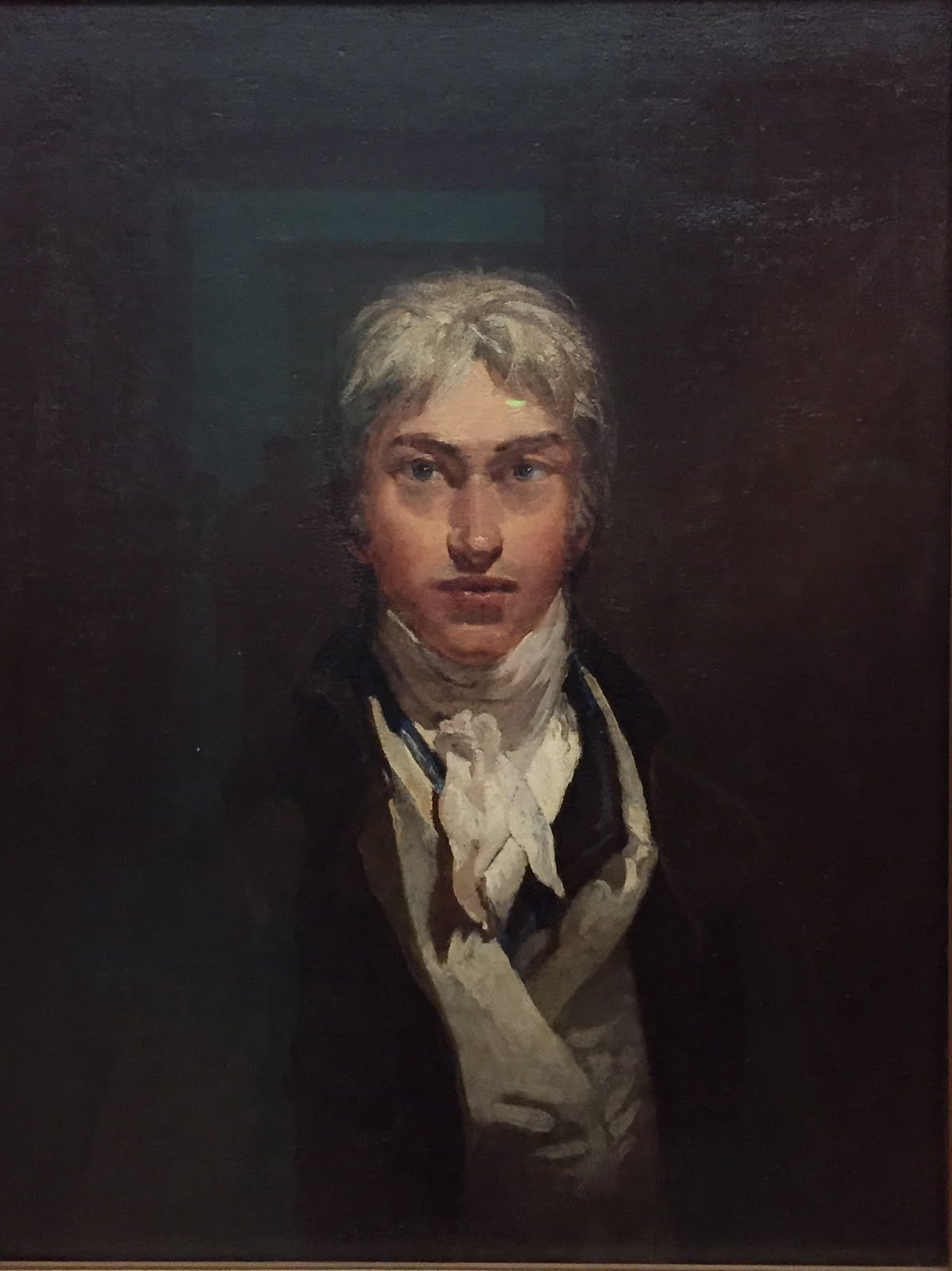
At the beginning of his artistic career, a young Turner painted this first self-portrait. Probably ready to commemorate his choice as a member of the Royal Academy, this portrait already shows a very talented and skilful artist, despite his young age.
The theme of this ruined castle in the north of England had already fascinated the painter from his first visits to the region. In this representation, he seems to be much more interested in creating an atmosphere, at a specific time of day, than in any specific detail of the theme and the surrounding landscape.
It may be interesting to make a comparison with primitive watercolour that represents the same theme about fifty years before oil painting, when the painter was 23 years old, at the time of one of Turner’s first visits to Northumberland, where Norham Castle is located. The first previous self-portrait was contemporary with watercolour and portrays painters in their first twenty years.
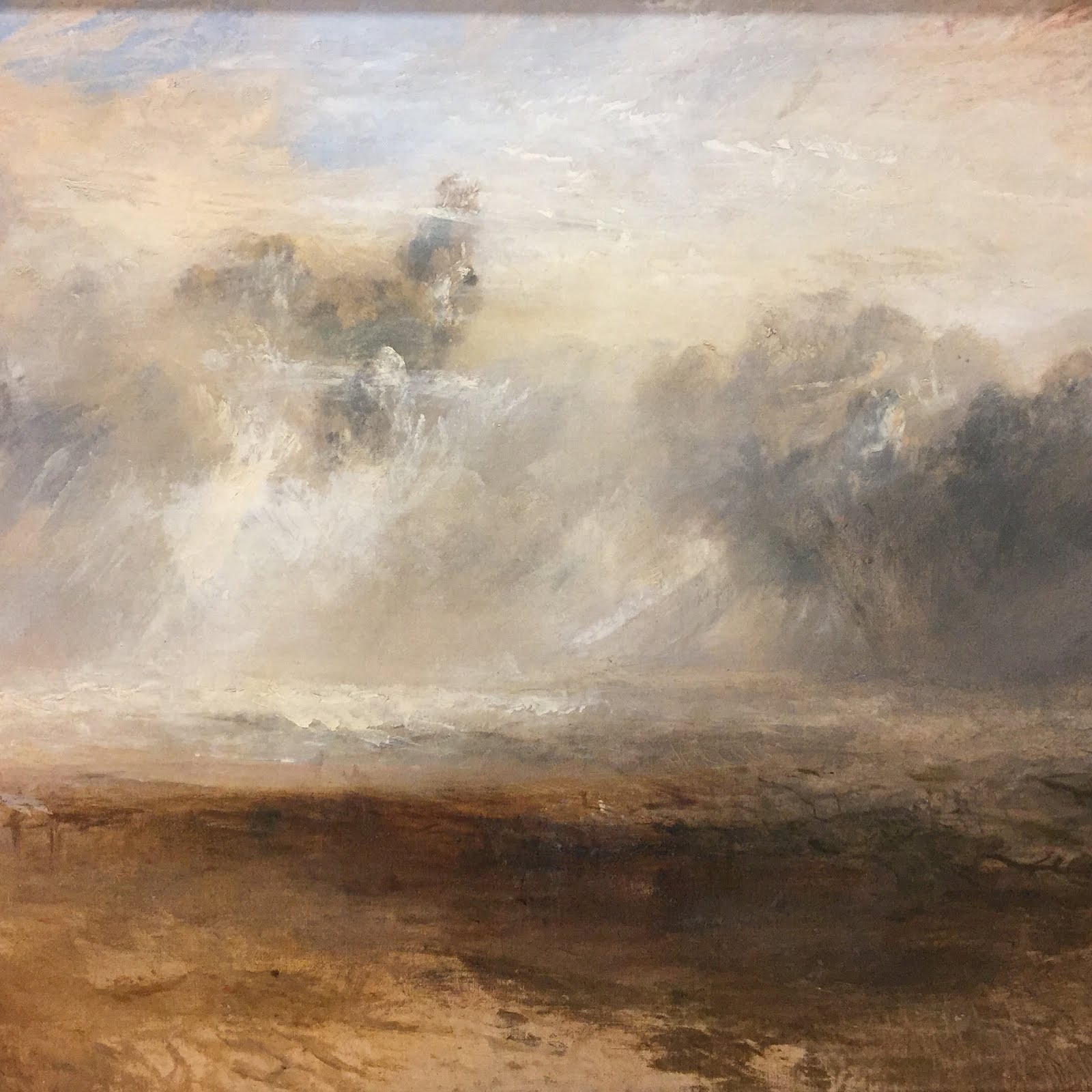
The English coast was a great source of inspiration for Turner, who spent much time in Margate, for example, to expose himself to the roughness of the North Sea and its turbulent seas, represented here with a microwave on a beach.
The last years of Turner’s life were quite difficult and the painter died in 1851 at the age of 76, leaving his large private collection in the country. This also included some unfinished paintings that give an overview of the painter’s artistic process for his creations. Turner is buried in St. Paul’s Cathedral, alongside another great British painter, Joshua Reynolds.
Essential online references for JMW Turner
- Wikipedia (J.M.W. Turner) Comprehensive overview of Turner’s life, works, influence, and legacy.
- Tate Gallery (Turner Collection) Extensive information on Turner’s works, biography, and the Turner Bequest.
- The Turner Society – Dedicated society with resources, events, and publications about Turner and his art.
- Turner’s House – Museum and resource focused on Turner’s former home and his inspiration in Twickenham.
- EBSCO Research Starters Scholarly overview of Turner’s career, style, and significance in art history.
These sources offer authoritative and in-depth information on J.M.W. Turner’s art, biography, and influence.
You can also follow me on my other social media channels:
And subscribe to the updates of this blog by email:
Discover more from Words, Colours and Notes
Subscribe to get the latest posts sent to your email.
9 thoughts on “JMW Turner 👨🏼🎨🎨🏴”