



Kandinsky’s “Circles in a Circle”: A Critical Analysis of Geometric Harmony and Inner Necessity
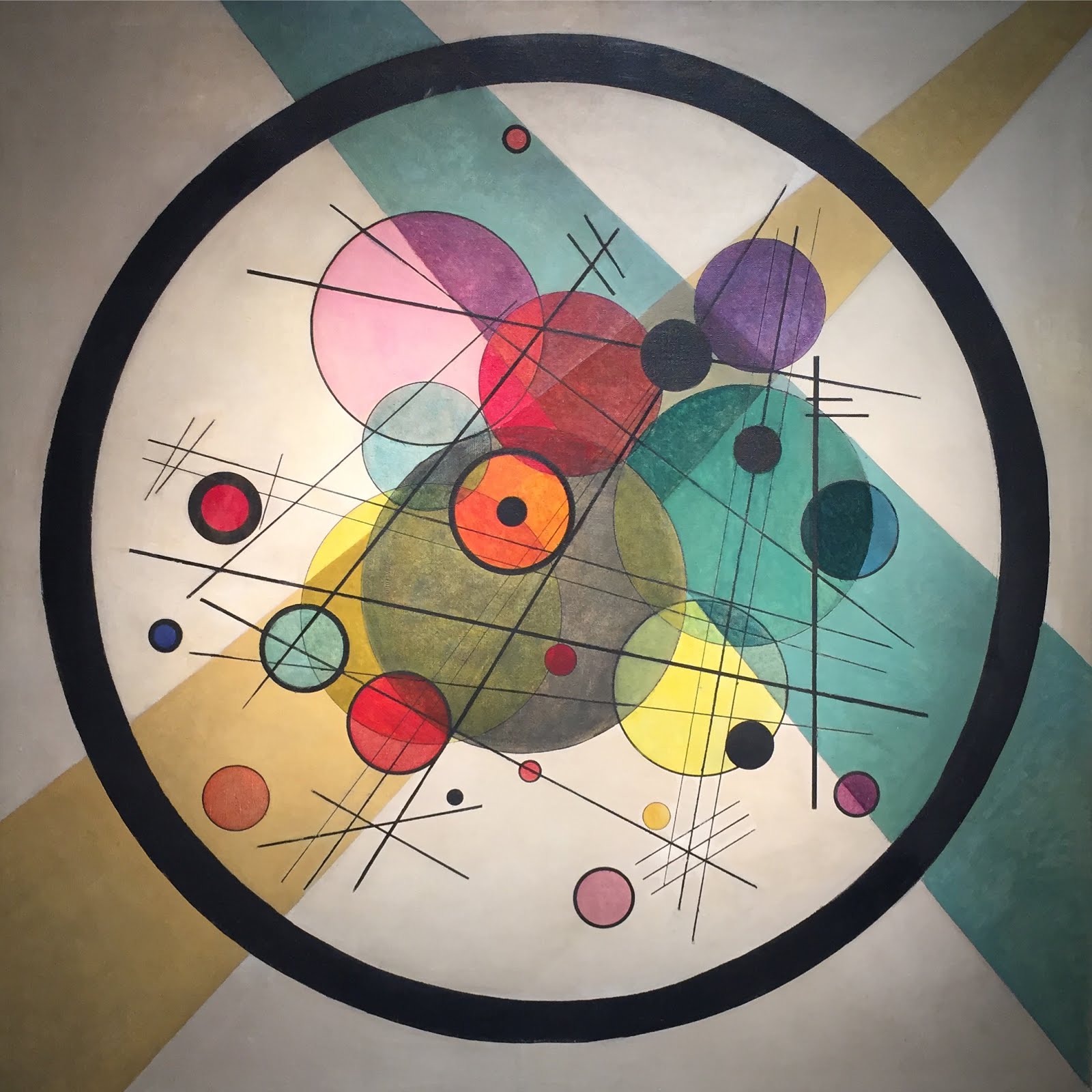
In 1923, Wassily Kandinsky painted Circles in a Circle, a striking, meticulously composed work that has become a cornerstone of early 20th-century abstract art. Today, the painting resides in the Philadelphia Museum of Art, where it is part of the museum’s significant collection of European modernism. Measuring 38 x 37 inches (96.5 x 94 cm), this canvas is an emblematic example of Kandinsky’s mature style—an elegant synthesis of geometry, spiritual aspiration, and color theory. It reflects both the theoretical explorations of the Bauhaus years and a deeper philosophical engagement with form, intuition, and the metaphysical essence of painting.
Historical and Artistic Context
When Circles in a Circle was painted, Kandinsky was newly situated at the Bauhaus, the influential German school of art, design, and architecture founded by Walter Gropius. After years in Munich and a war-induced exile in Russia, Kandinsky joined the Bauhaus faculty in Weimar in 1922, shortly before the painting’s completion. This was a pivotal moment not only in his career but also in the broader evolution of modernist abstraction. Artists and theorists across Europe were grappling with the task of giving form to the invisible: emotions, music, mathematical beauty, cosmic order.
The Bauhaus ethos emphasized rational design and a utopian synthesis of art and life. It was a place where the traditional hierarchies between fine art, craft, and architecture were dissolved. For Kandinsky, it offered fertile ground to articulate his theories of form and spiritual resonance. While the Bauhaus is often associated with functionalism and minimalism, Kandinsky brought to it a deeply mystical sensibility. He believed in the inner necessity of art—a term he coined in his 1910 treatise Concerning the Spiritual in Art. This idea posited that true art springs from an internal compulsion, an alignment between the artist’s soul and the forms they choose.
Formal Elements and Composition

Circles in a Circle is, at first glance, deceptively simple. It features a large black circle framing a constellation of smaller, multicolored circles that vary in size, transparency, and saturation. Two diagonal lines intersect the canvas from edge to edge, cutting across the frame like beams of light or vectors of tension. Unlike the frenetic compositions of Kandinsky’s earlier Expressionist phase, this work is calm, deliberate, and architectonic. There is balance without symmetry, energy without chaos.
The large black circle that encases the composition acts both as a frame and a boundary—a world unto itself. Kandinsky called it “the most peaceful shape,” and in this painting, it functions almost like a cosmic lens through which we view the micro-universe of interacting orbs. The smaller circles float in varying spatial relations to each other, suggesting not only movement but harmony. This play of circles within a circle evokes astronomical models, molecular diagrams, and even musical notation—systems where abstract elements convey higher laws.
The intersecting lines, though stark, do not disrupt the overall harmony; instead, they contribute to a dynamic tension that prevents the composition from lapsing into decorative stasis. They introduce linearity into a world of curves, accentuating the spatial relationships between the smaller circles and giving the whole a subtle rhythm. These lines may also hint at light rays or trajectories, connecting Kandinsky’s abstract cosmos to a larger continuum of time and space.
Color, too, plays a critical role. The hues range from soft pastels to vivid reds and blues. The juxtaposition of translucent and opaque colors generates depth, and the careful positioning of complementary tones adds vibrancy without overwhelming the viewer. In this restrained palette, every hue seems purposeful, emotionally calibrated.
Symbolism and Philosophy

Kandinsky saw geometric forms as visual metaphors for spiritual truths. The circle, more than any other shape, held deep significance. In Point and Line to Plane (1926), another of his theoretical works written during the Bauhaus period, Kandinsky elaborates on the emotional and symbolic content of basic shapes. The circle, he asserts, represents the soul, unity, infinity. It is the most abstract yet most “natural” of forms, bridging the material and the immaterial.
Thus, Circles in a Circle can be read not merely as an exercise in formal design but as a metaphysical diagram. It expresses the artist’s belief that abstract art could evoke inner states more powerfully than representational forms. Kandinsky does not depict the spiritual—he constructs it, giving shape to the unseen. The painting functions like a mandala, inviting meditation and introspection. At a time when the world was still reeling from the devastations of World War I and embracing new technological horizons, such compositions offered a counterpoint: visual spaces for healing, contemplation, and transcendence.
Relevance in the Evolution of Abstract Art
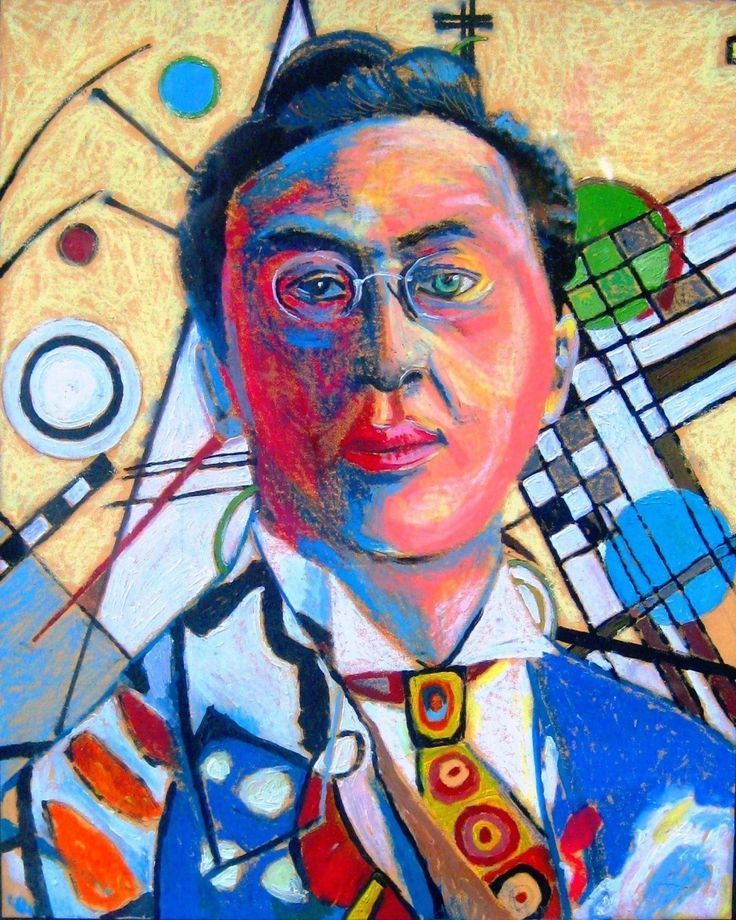
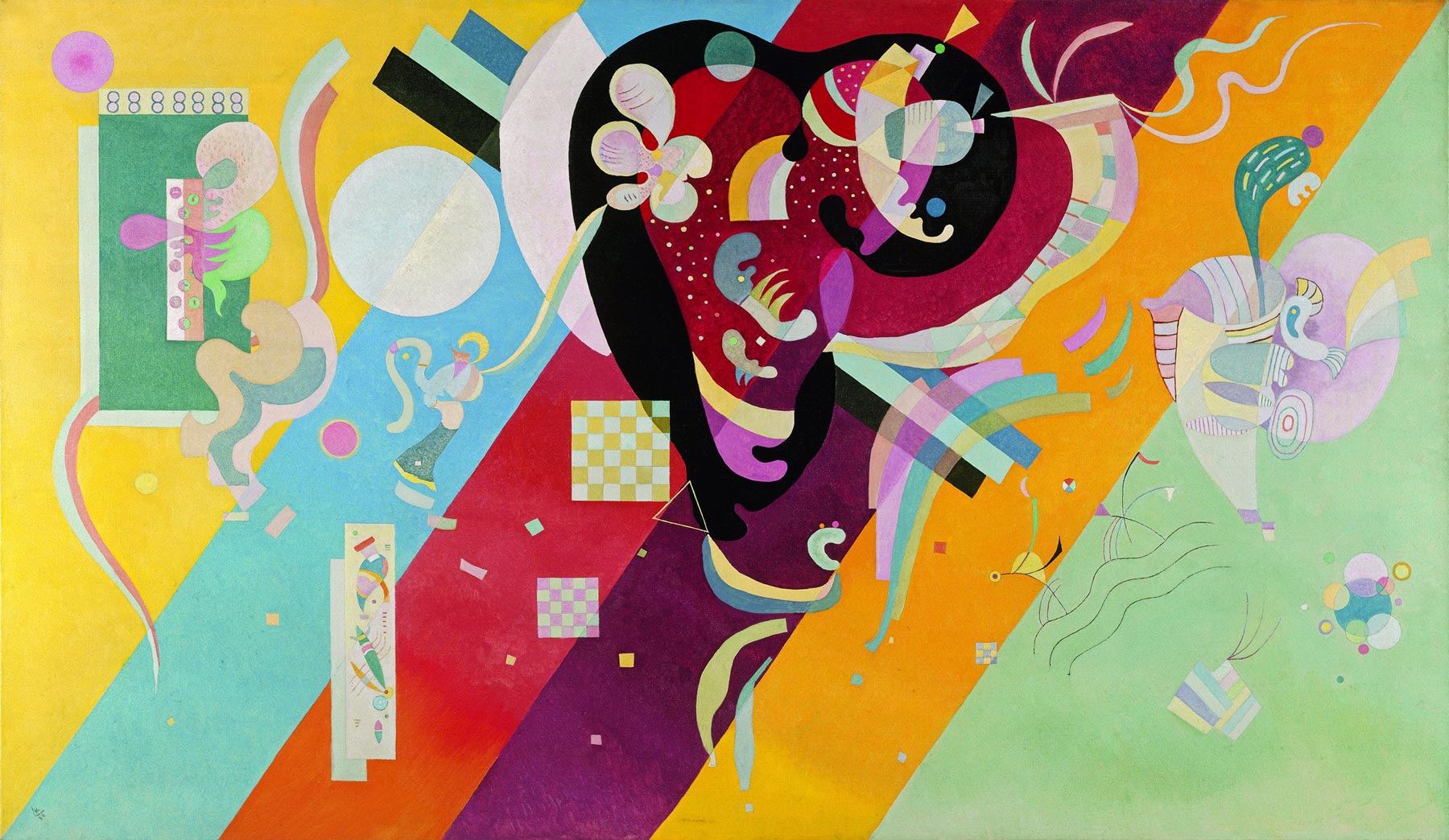
Kandinsky was a pioneer of non-objective painting. Alongside contemporaries like Kazimir Malevich and Piet Mondrian, he helped move Western art beyond depiction and into the realm of pure abstraction. Yet Kandinsky’s approach differed notably from his peers. Where Malevich’s Suprematism aimed at total reduction and Mondrian’s Neoplasticism sought universal order through grids and primary colors, Kandinsky retained an expressive, almost musical dimension in his abstractions. Circles in a Circle exemplifies this: it is orderly but not rigid, abstract yet emotionally charged.
This painting marks a crucial moment in the genealogy of geometric abstraction. It prefigures the systematic approaches of later Constructivists and Minimalists while retaining an aura of personal, spiritual resonance. It is both methodical and poetic—a duality that has ensured its lasting influence.
Artists ranging from Paul Klee to Sol LeWitt and contemporary digital artists owe a debt to Kandinsky’s experiments in form and theory. The tension between spontaneity and structure, chaos and cosmos, remains a potent model for artistic inquiry.
The Painting’s Current Home: Philadelphia Museum of Art
Today, Circles in a Circle is housed in the Philadelphia Museum of Art, a fitting location for a painting that bridges disciplines. The museum’s modern art collection includes works by Duchamp, Picasso, and Brancusi—artists similarly engaged in redefining the language of art. In this context, Kandinsky’s work stands out as both formally rigorous and emotionally expansive.
Visitors encountering the painting in the museum are often struck by its stillness and harmony. It does not shout but invites. It rewards prolonged looking and yields meanings slowly. As part of a public collection, it continues to fulfill Kandinsky’s dream of art as a spiritual beacon in the modern world—a guide not only to aesthetic appreciation but to introspection and empathy.
Conclusion
Circles in a Circle is more than a painting—it is a philosophical proposition rendered in color and line. It reflects Kandinsky’s enduring quest to make visible the invisible, to structure emotion, and to elevate art beyond the material. Set within the larger movement of Bauhaus-era modernism, it bridges the rational and the mystical, the formal and the ineffable.
In our contemporary moment—dominated by image saturation and rapid visual consumption—Kandinsky’s work reminds us of the value of looking deeply. Circles in a Circle is an invitation to step into a quieter realm where geometry sings, and color meditates—a timeless testament to abstraction’s capacity to touch the soul.


Essential bibliography
- Painting entry at the Philadelphia Museum website
- Painting entry at Kandinsky’s paintings
- Painting entry at Sartle

You can follow me also on my other social media channels:
and subscribe for updates on this blog by email:
Discover more from Words, Colours and Notes
Subscribe to get the latest posts sent to your email.
One thought on “Circles in a Circle, by Wassily Kandinsky 🎨⚫️🏴”